
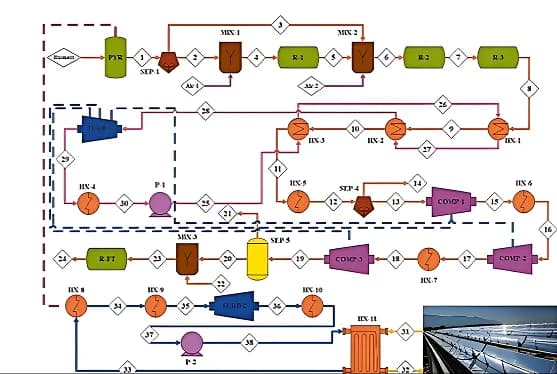
This study addresses that gap by proposing an innovative, solar-assisted autothermal biomass gasification system fully integrated with Fischer–Tropsch synthesis, a Rankine steam power cycle, and an MDEA-based post-combustion carbon capture unit. Concentrated solar heat is combined with autothermal gasification to supply thermal energy for the process and to preheat feed streams, improving syngas quality and overall thermal management. The entire flowsheet was designed and simulated in ASPEN Plus, while a multi-objective NSGA-II optimization (implemented in MATLAB and coupled with ASPEN Plus through a COM interface) was used to simultaneously maximize energy and exergy efficiency, improve economic return, and minimize CO2 emissions an integration and optimization strategy not previously documented for this class of hybrid biomass–solar systems. The analysis spans energy, exergy, and economic (3E) assessment together with a full life-cycle assessment (LCA), offering a comprehensive picture of the technical, financial, and environmental performance of the proposed cogeneration concept.
2. Results and Discussion
Energy and exergy performance
In the base configuration, the gasification unit converted biomass into syngas with 58.26% energy efficiency and 53.5% exergy efficiency, while the Fischer–Tropsch synthesis unit achieved 49.61% energy and 47.25% exergy efficiency with the lowest exergy destruction (19.2%) among the major sections. The post-combustion carbon capture unit was the weakest link, with only 33.18% energy and 32.6% exergy efficiency and the highest exergy destruction (48.8%), pointing to solvent regeneration and absorption column irreversibilities as priority targets for improvement. Auxiliary equipment heat exchangers and compressors performed comparatively well, reaching energy/exergy efficiencies of about 67.6%/62.4% and 73.2%/69.8%, respectively.
Economic performance
Using a biodiesel sale price of 1490 $/ton and an electricity price of 0.085 $/kWh, the base-case system required a capital cost (CAPEX) of 0.734 M$/ton biomass and an annual operating cost (OPEX) of 633,600 $/(year·ton biomass). The resulting economics were favorable: a net present value (NPV) of 0.588 M$/ton biomass, an internal rate of return (IRR) of 19.12%, and a payback period (PBP) of 3.74 years. Sensitivity analysis showed that rising interest rates and steam costs erode profitability (e.g., PBP lengthening to 4.42 years as steam cost increases), whereas a longer plant lifetime substantially improves all financial indicators, with NPV rising from 0.382 to 0.588 M$/ton biomass as the operating horizon extends from 15 to 20 years.Effect of solar input and operating parameters
Increasing solar radiation from 0.4 to 1.2 kW/m raised total generated power from 0.468 to 1.404 MW, improved Rankine cycle efficiency from 21.8% to 24.9%, cut the electricity cost from 0.1275 to 0.0485 $/kWh, and reduced CO2 emissions from 0.224 to 0.093 ton/MW, confirming the strong economic and environmental value of the solar contribution. Parametric studies further revealed clear optimum operating windows: an air/biomass ratio of 1.4–1.6 maximizes syngas quality and thermodynamic efficiency; a Fischer–Tropsch reactor length of about 7–8 m maximizes biodiesel yield with diminishing returns beyond that; biomass moisture should be kept below ~20% to avoid efficiency losses; and a gasification temperature near 1000 °C gives the best trade-off between syngas/biodiesel yield and CO2 emissions.Life-cycle assessment
Compared with a conventional fossil-fuel power plant and a stand-alone solar parabolic-trough (PTC) system, the biodiesel-based cogeneration system showed clearly lower impacts on global warming, acidification, and fossil-resource depletion. Its main drawbacks were slightly higher water consumption and toxicity-related impacts, indicating that solvent and water management remain areas for future improvement.
NSGA-II multi-objective optimization
Applying NSGA-II (population of 100, 246 generations, crossover rate 0.92, mutation rate 0.05) with TOPSIS-based decision-making identified an optimal operating point that improved total energy efficiency from 55.91% to 57.08% and exergy efficiency from 51.77% to 53.21%, mainly through better heat integration and lower total exergy destruction (from 3484 to 3157 kW). The optimized design also reduced CO2 emissions from 0.50 to 0.468 ton/MW, lowered the electricity cost from 0.0543 to 0.0526 $/kWh, shortened the payback period from 3.74 to 3.49 years, and raised NPV from 0.5877 to 0.6078 M$/ton biomass with only a modest rise in biodiesel unit cost (1350 to 1386.2 $/ton) and a small increase in biodiesel output (43.84 to 44.68 kg/h). These results demonstrate that multi-objective optimization can reconcile thermodynamic, economic, and environmental objectives without sacrificing overall system performance.

031-33333333
مقالهنشریه
Techno-Economic and Environmental Assessment of a Hybrid Bioenergy System Optimized via NSGA-II: Biomass Pyrolysis, Fischer–Tropsch Synthesis, and Solar-Enhanced Power Generation
۲۸ شهریور ۱۴۰۵
مقالات و نشریات

مقاله
بازرسی نفت و گاز؛از اکتشاف تا ایمنی پایدار
بازرسی در صنعت نفت و گاز، یکی از ارکان اساسی تضمین ایمنی، کیفیت و بهرهوری در زنجیره تولید انرژی است. در شرایطی که موضوع ناترازی انرژی به یکی از دغدغههای اصلی کشورها تبدیل شده، نمیتوان از اهمیت نظارت دقیق در این صنعت راهبردی چشمپوشی کرد. بازرسیهای تخصصی از مرحله اکتشاف تا توزیع نهایی، نقشی حیاتی در جلوگیری از نشت، انفجار، آسیبهای زیستمحیطی، خرابی تجهیزات و اتلاف منابع دارند.
ادامه مطلب
مقاله
سنتز سبز آمونیاک با کاتالیستهای ناهمگن؛ از فعالسازی نیتروژن تا تولید پایدار
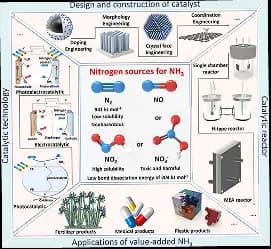
آمونیاک یکی از بنیادیترین مواد شیمیایی جهان است؛ مادهای که علاوه بر نقش اصلی در تولید کودهای نیتروژنی، امروزه بهعنوان حامل هیدروژن و گزینهای برای ذخیره انرژی نیز مطرح شدهاست. با وجود آنکه مولکول آمونیاک فاقد کربن است، روش متداول تولید آن الزاماً سبز نیست. فرایند هابر–بوش برای تبدیل نیتروژن و هیدروژن به آمونیاک، معمولاً در دمای حدود ۴۰۰ تا ۶۰۰ درجه سلسیوس و فشار ۱۵ تا ۳۰ مگاپاسکال انجام میشود. افزون بر مصرف انرژی زیاد، هیدروژن موردنیاز این فرایند عمدتاً از ریفرمینگ گاز طبیعی یا گازیسازی زغالسنگ تأمین میشود؛ ازاینرو، تولید آمونیاک سهم قابلتوجهی در مصرف جهانی انرژی و انتشار دیاکسیدکربن دارد[۱و۲].
ادامه مطلب
مقاله
هـیـدروژن، جـایـگـزیـن سـوخـتهـای فـسـیـلی بـا کـمـک پـروسـکـایـتهـای دوگـانـه
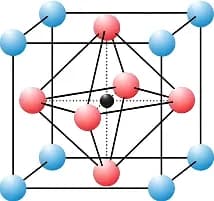
رشد جمعیت، توسعه صنایع و پیشرفت فناوری موجب افزایش مستمر تقاضا برای انرژی در سراسر جهان شدهاست. در حال حاضر، بخش عمده این تقاضا همچنان از طریق سوختهای فسیلی مانند نفت، زغالسنگ و گاز طبیعی تأمین میشود. با این وجود، محدود بودن ذخایر این منابع و افزایش هزینههای استخراج و بهرهبرداری از آنها، ضرورت حرکت به سمت منابع جایگزین و پایدار انرژی را بیش از گذشته آشکار ساختهاست. ازاینرو، انرژیهای تجدیدپذیر بهدلیل دسترسپذیری، پایداری و سازگاری بیشتر با محیطزیست، به یکی از ارکان اصلی سیاستهای انرژی در بسیاری از کشورها تبدیل شدهاند و سهم آنها در تأمین انرژی جهانی بهطور پیوسته در حال افزایش است.
ادامه مطلب